About Nina Hadfield — Art Director and Senior Brand Designer
Independent art director and senior brand designer specialising in brand identity, visual systems and digital design for B2B technology.
If we rewind all the way back — did you always know you would end up in design?
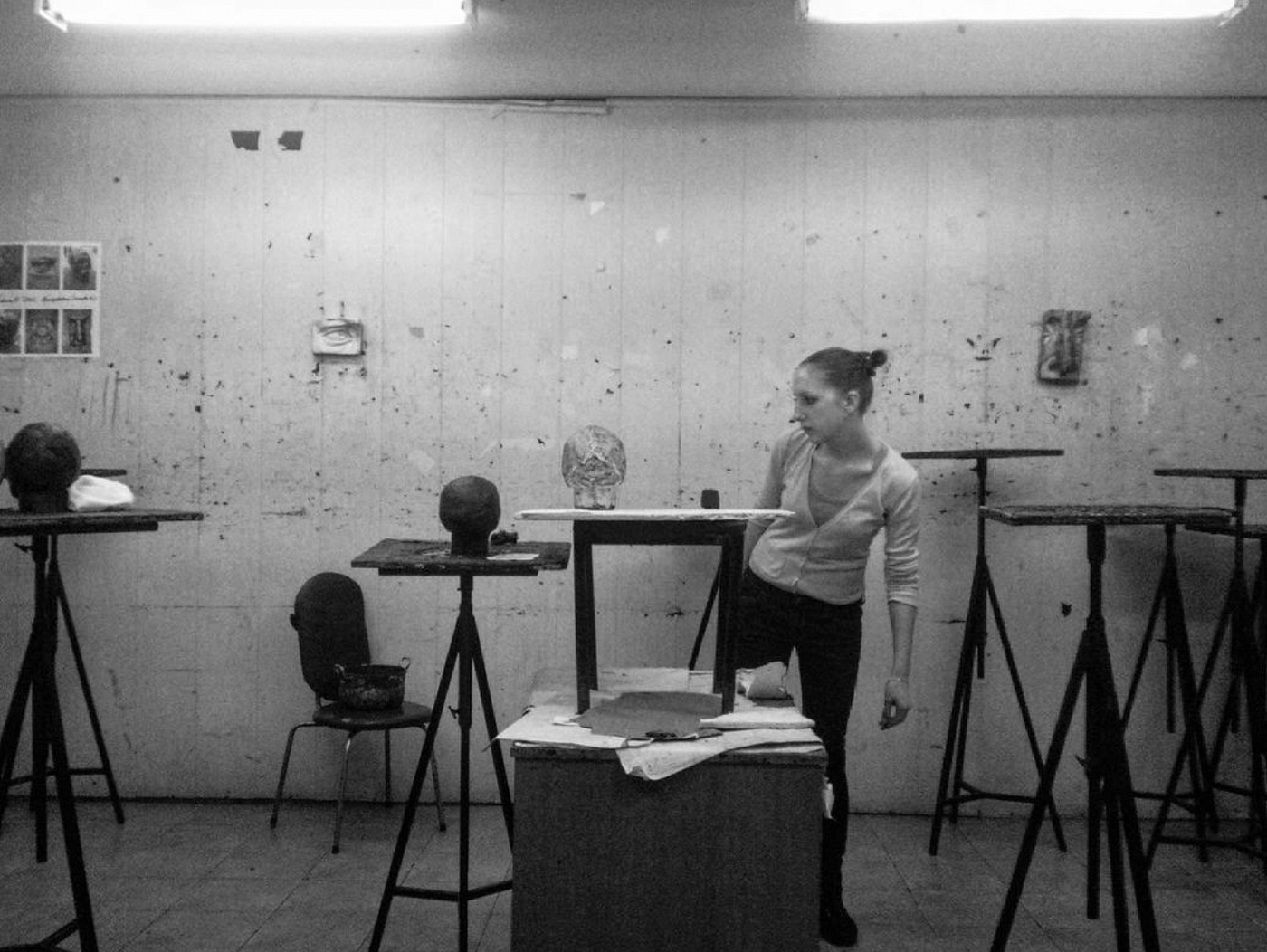
I always knew I would do something visual. I drew, sculpted, sewed, built things, took things apart and put them back together
But I think I was even more interested in understanding how things worked. Why one object feels whole while another seems to fall apart into pieces. How light changes form. What makes a material expressive
Not exactly the most typical way for a child to look at things
I certainly didn’t think of it as any kind of approach at the time. I was simply interested in looking a little longer than necessary
I saw that your formal art education started quite early. How did you end up at art school?
Largely because of my grandfather. He noticed quite early that it was becoming more than a childhood hobby, took it seriously before anyone else did, and insisted that I apply
He was always repairing something, inventing something, adapting things, altering theatre costumes. I spent a lot of time nearby, watching him work
So the instinct to understand the structure before changing it appeared pretty early
It seems that way
🙂
Eleven years of art training is well beyond a childhood hobby. What did it give you besides the ability to draw?
The ability to see relationships between things. Proportion, light, volume, composition. And patience
One of my teachers used to say, “Here we train the hand and teach the eye — not the other way around”
The older I get, the more precise that sentence feels
“Teaching the eye” sounds almost like a professional superpower
I’d be careful with superpowers
😄
Experience does let you notice a problem very quickly. But I still need to be able to explain why I see it and why I’m proposing a particular solution. Otherwise professional judgment slips very easily into personal preference — and from there into pure subjectivity
When did art turn into design?
I wouldn’t really say I moved from art into design. It was more that another coordinate system gradually appeared alongside art — another layer
In design, form alone was no longer enough. There was a person it was being created for, a task, an environment, production, constraints — and the question of what would happen to the solution after the designer had finished working on it
And design became your formal field of study at university?
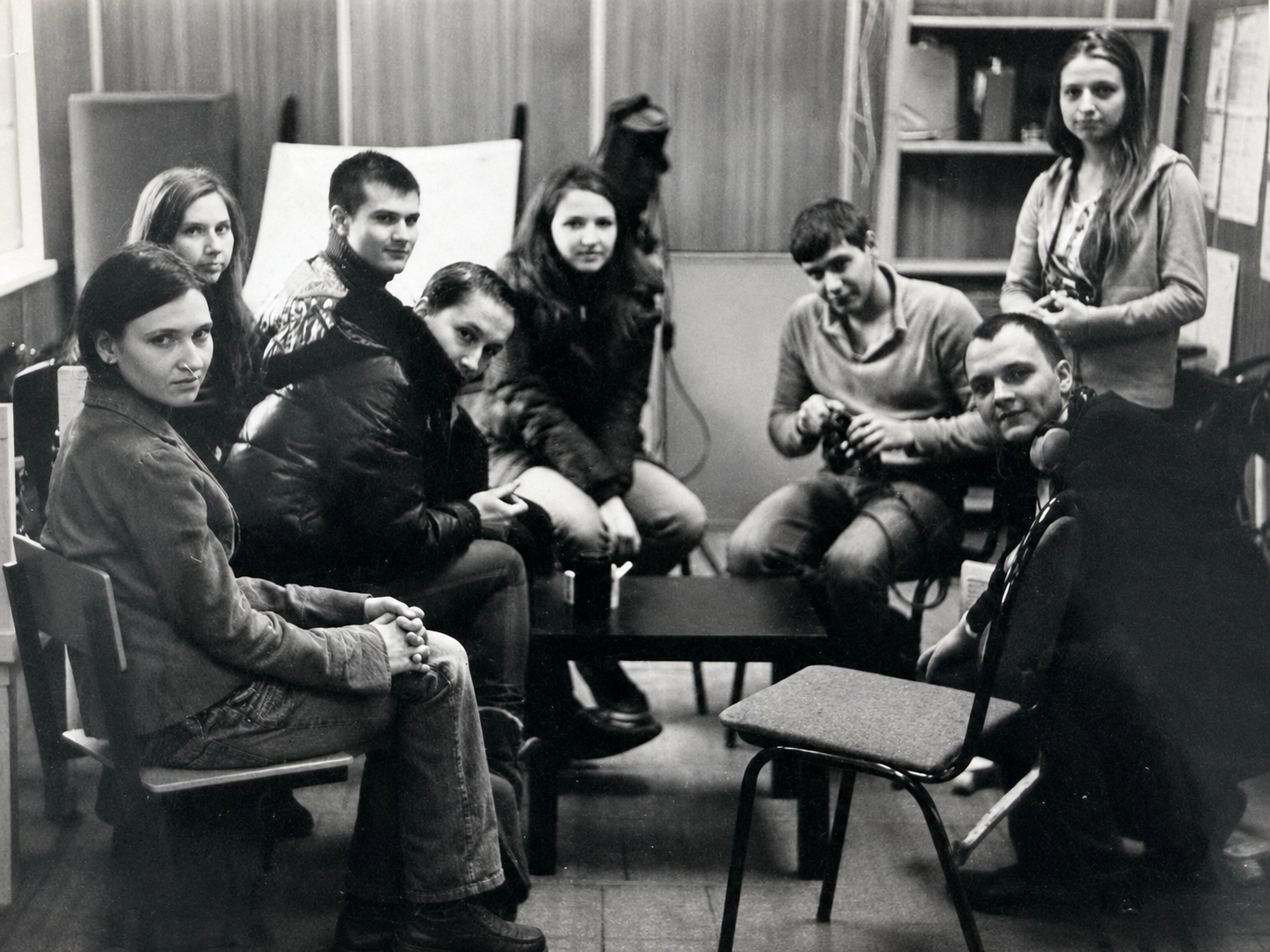
Yes. I completed a Bachelor’s degree in Art & Design at HSE University. Before that I’d also had a more technical period of study, so artistic and engineering ways of looking at a problem started sitting alongside each other quite naturally
And the mix of subjects was unusually broad
Very. Academic drawing and painting, typography, technical drawing, engineering graphics, photography, materials and packaging, marketing, CAD, 3D, art and design history
I was lucky in that respect. The artistic and technical sides of the work never really existed separately for me
Where did programming come into the picture?
It was an additional Programming & Design course. Nothing remotely deep enough for me to call myself a programmer — I only went far enough to understand the fundamentals
But that was exactly what I wanted: to understand the basic logic of code and how something I design eventually becomes a working product
So a conversation with a developer doesn’t end at, “That can’t be done”?
I certainly hope not
😅
It’s usually much more interesting to understand why it can’t be done. Is it a technical constraint? The cost of implementation? Product architecture? Or is there another route that no one has considered yet?
When both sides understand at least the basic logic of how the other works, the quality of the conversation changes completely
Do you remember your first paid work?
Yes. Illustrations for children’s editorial material
🖍️
And your first mistake?
That too
😅
Once, while I was working in publishing, I sent a TIFF to print without flattening the layers. Elements that were never supposed to be there made it all the way into the printed piece
That was pretty much my reaction too 😬
After that, “attention to detail” stopped being a nice line to put on a CV. A design mistake can have very physical consequences: money, time, an entire print run that has to be redone, and problems created for everyone further down the line
When did thinking in individual deliverables stop being enough?
Probably quite early
🙂
When you spend a long time inside one company, you get to see what decisions do over time. At launch, many things feel finished. A few years later, you can see which principles actually survive change — and which ones keep producing more and more exceptions
You’ve also spent a very long time inside one international technology company

Since 2013. I joined as Lead Designer and later became Art Director
Being able to observe the same system over many years has had a huge influence on how I think about design now
What changed the most?
Scale
📐
New products, markets, interfaces, channels and teams appear. At some point, one person simply cannot control every decision
And then “What should this look like?” becomes less interesting than “How do different people make good decisions within the same underlying logic?”
Is that where design systems enter the picture?
Among other things. I’ve been working with components and design systems for years
But a component library doesn’t automatically create a coherent system. If the underlying logic is weak, components simply help reproduce that weakness faster
A glowing endorsement of design systems
I do love design systems. I just don’t think they have magical powers
✨
You also taught web design. After working with experienced teams, that must have been quite a shift in audience
And a very useful one
I built a programme for students with almost no design background. I quickly realised how many things professionals stop noticing simply because those things have become obvious to them
If a rule only makes sense after you’ve spent several years sitting next to its author, then it probably still lives in the author’s head
That sounds like a fairly short distance from there to documentation and governance
Exactly. To me, they’re different parts of the same problem: how to make professional knowledge explicit and transferable, so it doesn’t remain trapped inside one person’s experience
And then, in the middle of this very systematic story, 3D suddenly appears
It actually wasn’t sudden at all
🙂
I had a feeling 🙂
I needed to design exhibition spaces and understand the space and the future construction before anything was built. Then came modelling, sculpting, characters, animation and digital environments
At some point, a professional tool also became part of my art practice
And from there came digital art, Web3 and exhibitions?
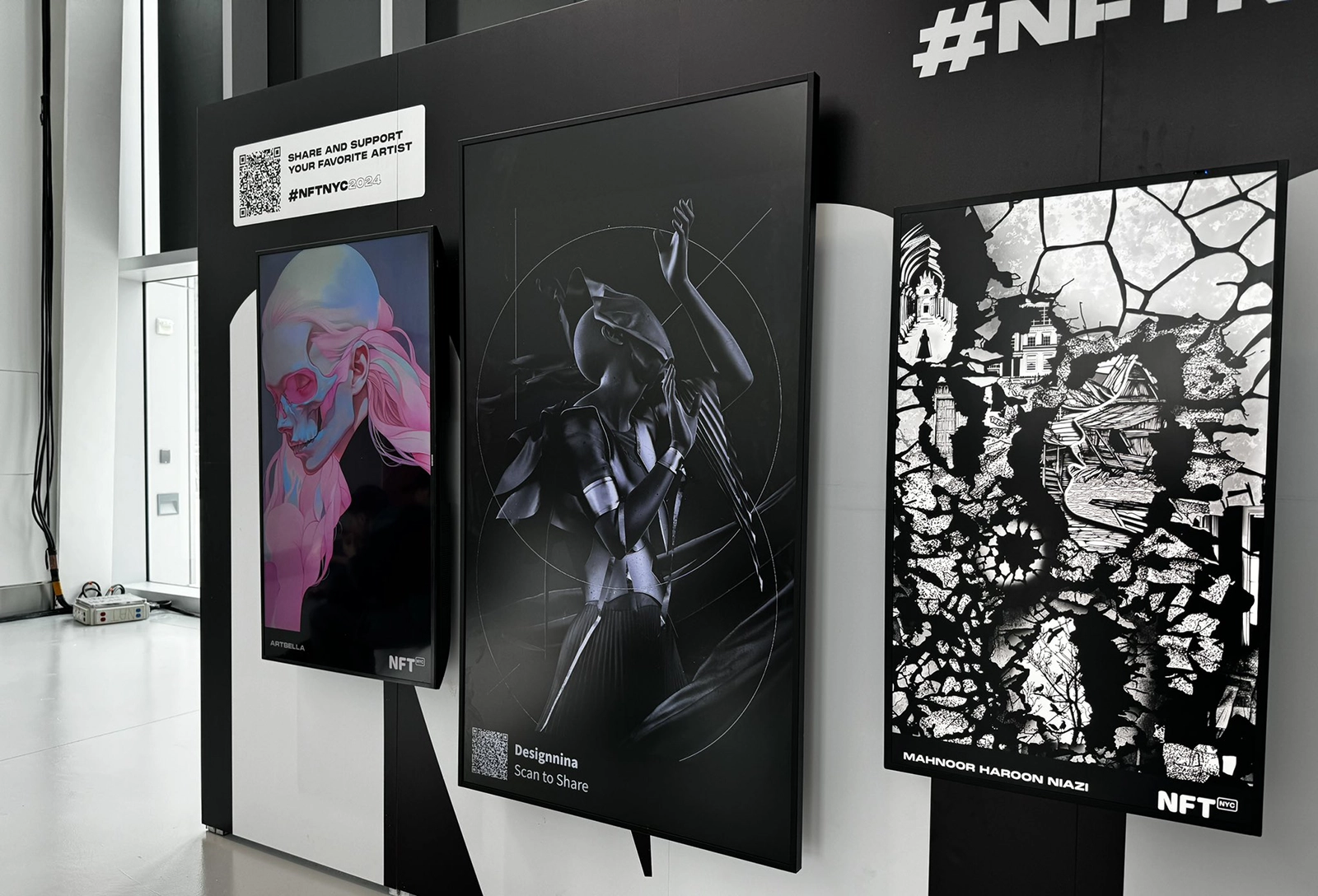
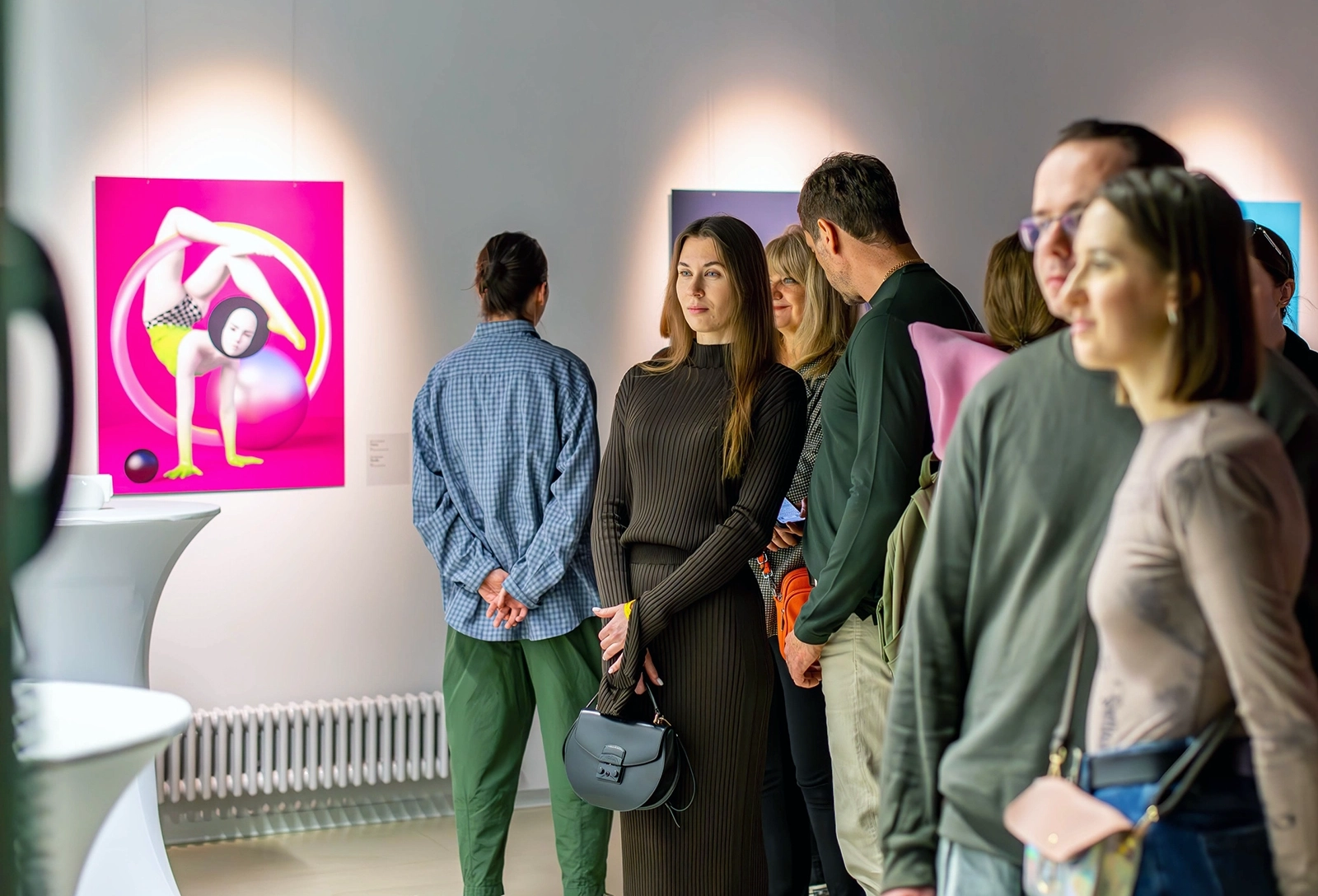
Yes. Although art never really disappeared — the tools just kept changing
🎨
3D gave me a way back into form, material and space, but inside a digital environment
St Petersburg, New York, Paris… That’s a fairly serious parallel track for someone who calls it “a practice alongside the main work”
😄
It matters a great deal to me. But I don’t like using art as proof that it somehow makes me better at commercial design
The connection is simpler: art keeps my visual field from shrinking to the boundaries of a single profession
From the outside, the list looks almost suspiciously broad: graphic design, interfaces, systems, art direction, 3D, art. Where is the centre of gravity in all of that?
In the way I look at a problem
I’ve never seen those fields as a collection of separate professions to accumulate. A new tool usually appeared when the previous one was no longer enough to understand or realise the task
So the centre for me isn’t the medium. It’s the ability to see the relationships between form, function, technology, and what happens to a solution after it leaves my hands
You’re an Art Director today. What kinds of problems actually interest you at that level?
Usually the ones that no longer fit inside a single deliverable
When a company has several products or brands. When product and marketing gradually drift into different visual worlds. When a design system already exists, but every new case creates another exception. When different teams make perfectly reasonable decisions that no longer add up to one coherent whole
And especially when another redesign looks like the obvious answer, but the real cause seems to sit somewhere deeper
So sometimes a client comes looking for design, but the actual problem isn’t entirely a design problem?
Exactly. Sometimes the design itself is doing its job perfectly well
But the company has changed: new products, new teams, new markets, new technologies. Old rules are still being used in an environment they were never designed for
At that point, adding another visual layer may only increase the complexity
Is that the territory you now call Visual Infrastructure?
These days, yes
🙂
The term itself is fairly recent for me. The problems it describes are much older
I needed a way to talk about brand, product, interfaces, communication and design systems as connected parts of the same environment — together with documentation and the logic behind how decisions get made
So it isn’t simply a new name for a design system
No. A design system can be part of Visual Infrastructure. It isn’t the whole infrastructure
And is that where your own Method came from?
At some point, I noticed a recurring logic in the way I was already working and decided to articulate it
Decode, Distill, Structure, Codify, Enable, Evolve
They aren’t six mandatory steps. In practice, stages can overlap, run in parallel, or send you back to an earlier one. Some projects simply don’t need all six
The METHOD gives me a working structure for analysing a problem. The actual route is shaped by the problem itself and by the context of the project
Does AI fundamentally change any of that?
It changes a great deal on the production side
Generating options, prototypes, images and copy is becoming faster. But production speed doesn’t answer which option is right — or why
That makes judgment even more valuable: the ability to choose, test and explain a decision, and to understand its consequences
After all of that, let me ask a very simple question. What do you still enjoy most about the work?
That moment when a problem that looked tangled at the beginning starts to become clear
When separate observations begin forming a structure and you can finally see what actually needs to change — and what is better left alone
Probably curiosity 🧐. That’s the one thing that has barely changed
And if, after all this, someone just wants the dates, roles, education and the full professional record?
📋
CV / Nina Hadfield
PDF format
Open
Then they should definitely open the CV
👀